
How to plan, time, and run follow-ups that actually convert, and why consistency is the one thing humans can't deliver alone.
1. The uncomfortable truth about follow-up
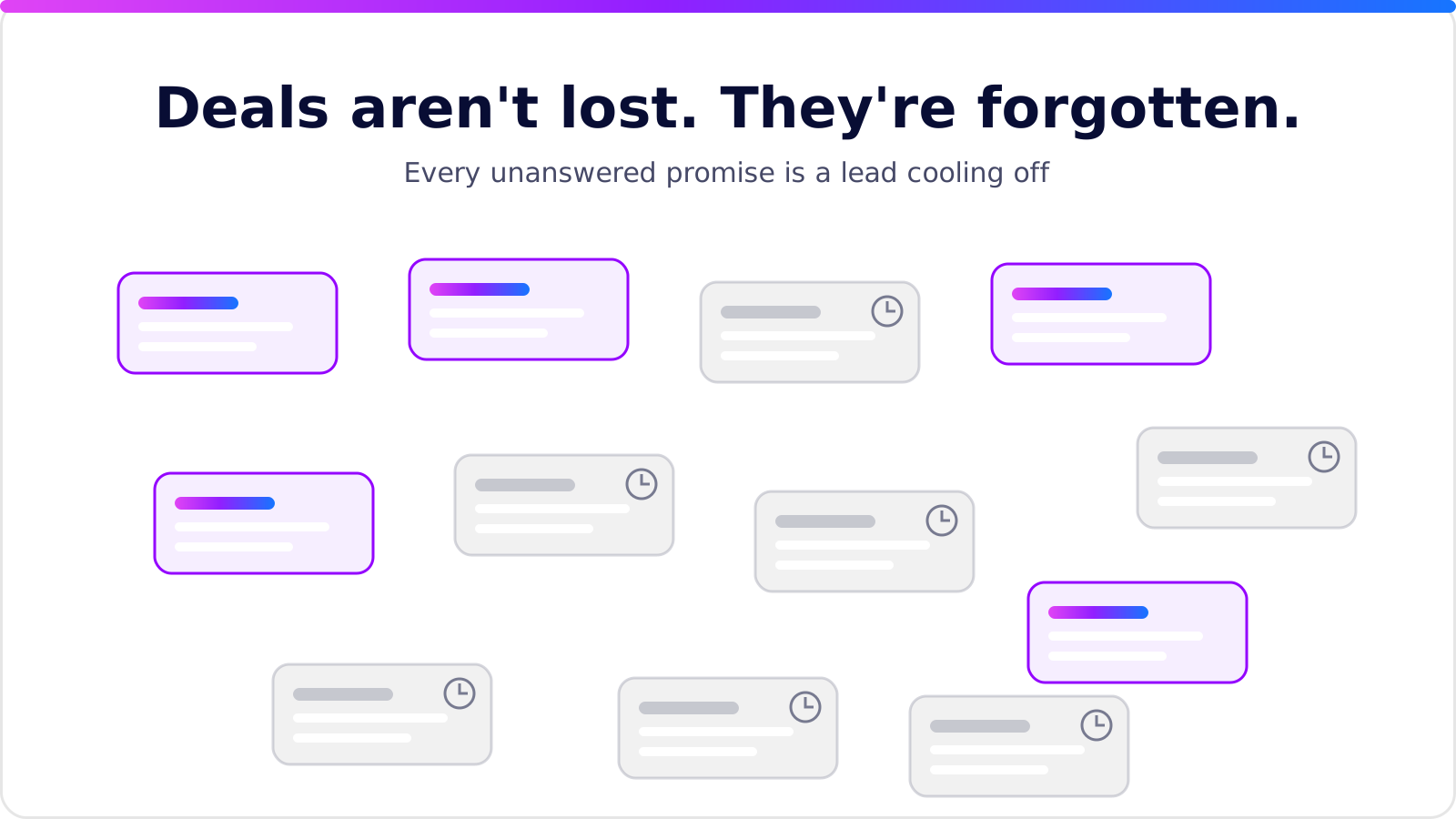
Ask any sales manager where deals die and you'll hear: pricing, competitors, budget. Look at the call logs and a different story shows up. Most deals don't get lost. They get forgotten.
- The prospect said "call me Thursday." Thursday was a heavy day. Nobody called.
- The rep promised to send a brochure. It went out four days late, after the prospect's interest had cooled.
- A warm lead went quiet after two attempts, and the rep moved to fresher leads.
None of these are skill problems. The rep knew exactly what to do. The failure was consistency: remembering every promise, for every lead, at the right moment, every single day.
This guide gives you a framework for deciding whether, whom, what, when and how to follow up, with examples from telecalling and inside sales. It also explains why this is a job that needs judgment, and why only a skilled human or an AI can do it, with one of them doing it far more reliably than the other.
2. Why rules aren't enough
Most CRMs handle follow-up with rules:
"If the lead status is 'Interested', create a task for +3 days."
That's a calendar, not intelligence. Consider what a real call sounds like:
Prospect: "I like it, but I need to run it by my partner. He's travelling till the 15th. Call me after that, maybe in the evening, my mornings are chaos."
A rule creates a task for +3 days. A good rep hears five separate facts:
- There's a second decision-maker (the partner).
- There's a hard constraint (not before the 15th).
- There's a preferred window (evening).
- The lead is warm (they said "I like it").
- The real next step isn't to "call the lead." It's to equip the prospect to pitch the partner.
The right follow-up is a call on the 16th at around 6 pm, preceded by a short summary message the prospect can forward to the partner. No rule produces that. Understanding produces it.
3. The five-question follow-up framework
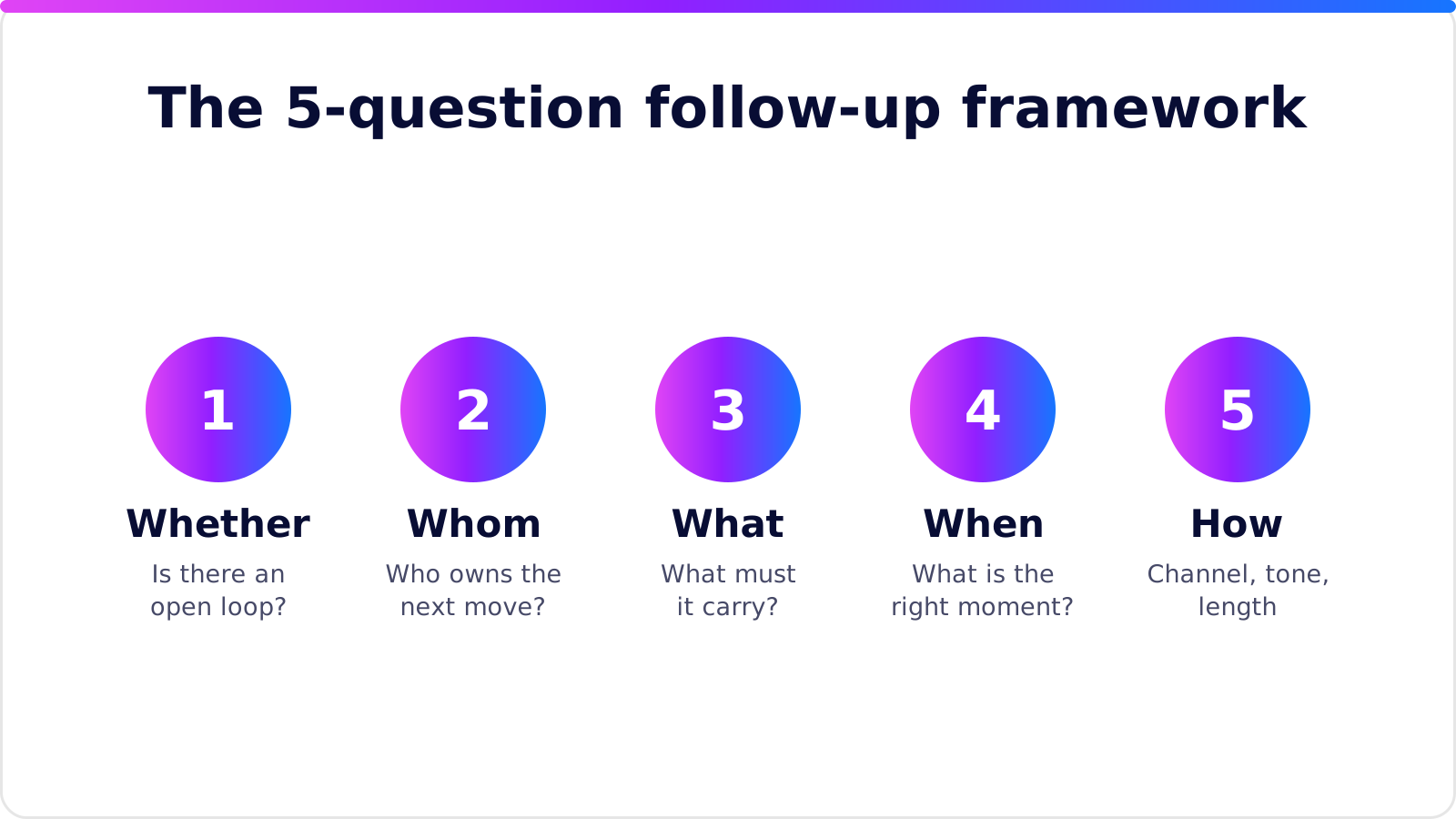
Every good follow-up answers five questions. Train your team to ask them after every call.
| # | Question | What you decide |
|---|---|---|
| 1 | Whether | Is there a real open loop, or just politeness? |
| 2 | Whom | Who owns the next move, and who else is involved? |
| 3 | What | What is the follow-up about, and what must it carry? |
| 4 | When | What is the right moment, not just the right date? |
| 5 | How | Which channel, tone and length? |
3.1 Whether: spot the open loop
An open loop is anything unresolved that one side is waiting on: a promise, a question, a pending decision, or an unaddressed objection.
Real open loops
- "Send me the pricing." (A commitment you made.)
- "I'll check with my CA and let you know." (A commitment they made.)
- "Hmm, the EMI seems high." (An unresolved objection.)
Not open loops
- "Yeah, we should connect sometime." (Polite filler. Don't create a task.)
- "Thanks, bye!" after a clear "not interested." (Closed. Respect it.)
The skill: commitments rarely use the word "follow up." "Let me think and revert" and "I'll talk to my wife" are both loops, and neither contains the keyword a rule would search for.
Telecalling tip: At the end of every call, say the loop out loud: "So I'll send the brochure on WhatsApp today, and you'll speak to your partner. I'll call you on the 16th evening. Does that work?" This verbal confirmation turns a vague loop into a shared commitment, and it gives your notes a clean source of truth.
3.2 Whom: ownership and people
Two sub-questions:
Who owns the next move?
- You owe them (send a quote). The deadline is yours to hit, and missing it costs credibility.
- They owe you (a document, a decision). Your job is a timely, gentle nudge.
- Neither, it's a nurture. The lead isn't ready, and you maintain the relationship.
Who else is in the picture? Note influencers and decision-makers: the spouse, the finance head, the IT manager. A follow-up addressed only to the person you spoke to can stall if the real decision-maker has never heard from you.
Segment by stage and temperature, not just by name:
| Tier | Example | Follow-up posture |
|---|---|---|
| Hot | Asked for a quote, has a deadline | Fast, specific, high-touch |
| Warm | Interested, evaluating | Steady, value-adding |
| Cold-to-nurture | Not now, maybe later | Light, spaced, relevant |
| Dormant | Silent after several attempts | Occasional re-open with a new reason |
3.3 What: carry the context
The most common follow-up failure is the generic one: "Hi, just checking in." It signals that you don't remember them.
A strong follow-up carries three things:
- Memory. Reference something specific: "You mentioned your daughter's admission is in June."
- Progress. Add something new: an offer, a document, an answer to their objection.
- A clear ask. One next step, not three.
Weak: "Hi Rahul, just following up on our call." Strong: "Hi Rahul, you said the 24-month EMI felt heavy. I checked, and there's a 36-month option that brings it to ₹X. Can I walk you through it for 5 minutes tomorrow evening?"
3.4 When: timing is reasoning, not arithmetic
"Follow up in 3 days" is a default, not a strategy. Better timing comes from combining signals:
- Stated constraints. "After the 15th." Hard rule. Never call earlier.
- Implied deadlines. "Before our Diwali sale." Find the date and work backward.
- Preferred windows. "Evenings." Honor them. Calls at the wrong time reduce pick-up rates and goodwill.
- Prospect rhythm. Some people reply within hours, others take a week. A four-day silence from the first is a signal; from the second it's normal.
- Lead heat decay. Interest cools. The hotter the lead, the shorter the safe window.
- Rep context. Don't stack twenty "urgent" callbacks into one hour. Spread them so each gets real attention.
Cadence for an unresponsive lead (illustrative; tune to your business):
| Attempt | Gap | Angle |
|---|---|---|
| 1 | Same day / next day | Recap + ask |
| 2 | +2 days | New value (offer, case study) |
| 3 | +4 days | Different channel (WhatsApp/SMS) |
| 4 | +7 days | Address likely objection |
| 5 | +14 days | Soft break-up: "Should I close this out?" |
Each attempt should change something (channel, time of day, or message). Repeating the same attempt in the same way is not persistence.
3.5 How: channel, tone, effort
- Channel. Match their behavior. A prospect who doesn't pick up calls may respond to a WhatsApp message within minutes.
- Tone. A first-time homebuyer needs reassurance. A procurement manager wants crisp facts.
- Length. After a long call, a short written recap works well. For a quick nudge, one line.
- Effort. Make the next step easy: a link to book a slot, a one-tap reply, a pre-filled quote.
4. The technical view: what a follow-up system actually has to do
For trainers, ops leads and tech-curious managers, here's what sits under the hood of a good follow-up workflow, whether it runs in a person's head or in software.
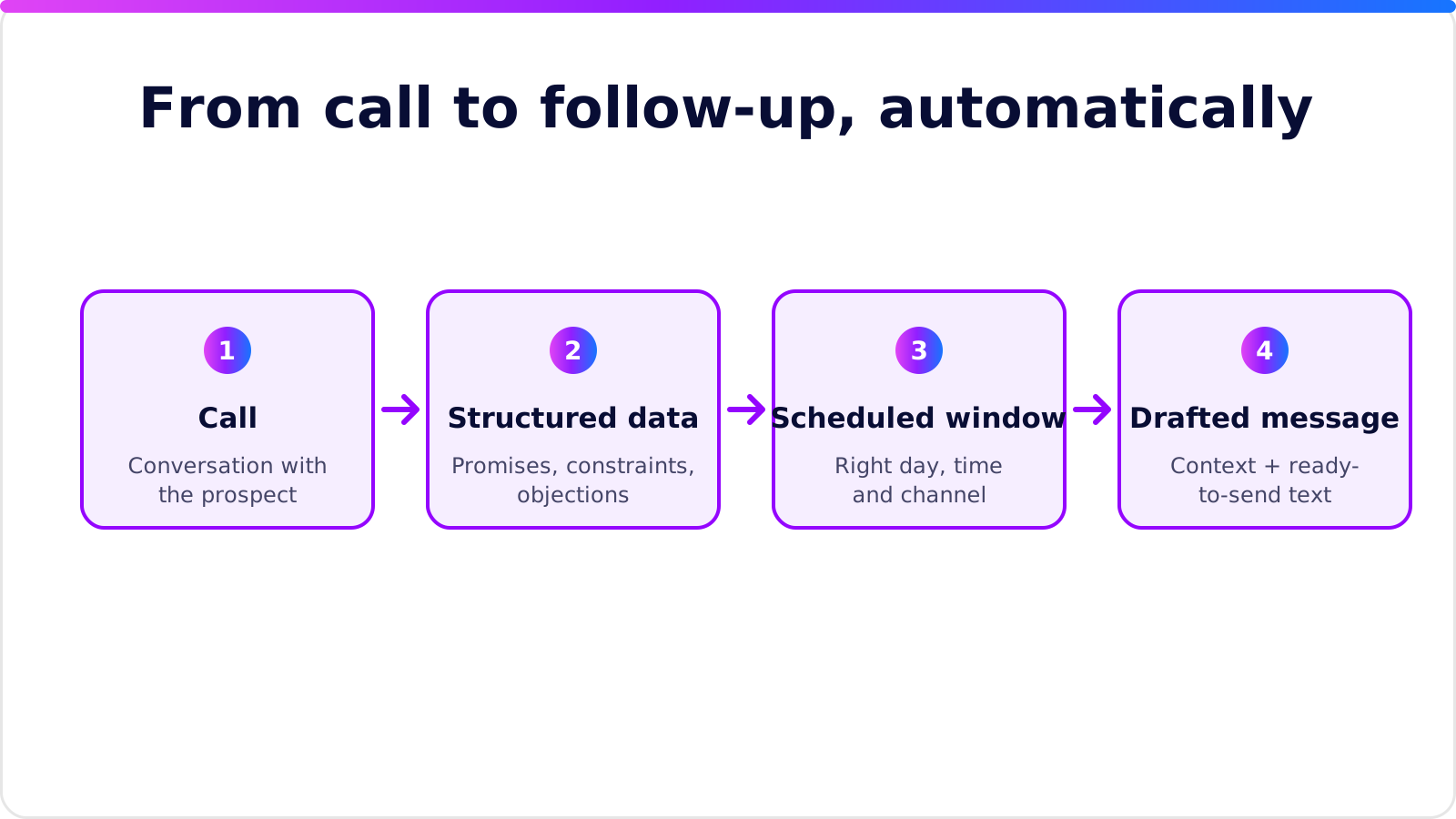
4.1 Capture: turn conversations into structured data
Every call produces unstructured information. The system must extract:
{
  "lead": "Rahul Mehta",
  "stage": "evaluating",
  "heat": "warm",
  "commitments_us": ["send brochure (WhatsApp, today)"],
  "commitments_them": ["discuss with partner"],
  "constraints": ["not before 15th", "evenings only"],
  "objections": ["EMI too high"],
  "decision_makers": ["Rahul", "partner (unnamed)"],
  "next_step": {"type": "call", "earliest": "16th", "window": "evening"}
}
This extraction step, from a call transcript or rep notes to structured fields, is where intelligence is mandatory. Natural language is messy: "end of the month," "after the festival," "once my brother is back."
4.2 Classify: intent, urgency, ownership
Each open loop gets labeled by:
- Type: commitment, question, decision, objection, relationship.
- Owner: us, them, shared.
- Urgency: hard deadline, soft deadline, none.
- Confidence: how sure are we this is a real loop? A low-confidence loop should be flagged for a human to confirm rather than silently turned into a task.
4.3 Schedule: combine constraints and signals
Scheduling is a constraint-satisfaction problem:
- Hard constraints first. Earliest allowed date, preferred window, do-not-contact hours.
- Soft signals second. Lead heat, response history, deal value.
- Load balancing last. Don't overload a rep's day; protect time for new conversations.
The output isn't just a date. It's a time window, a channel, and a purpose.
4.4 Act: draft, don't just remind
A reminder says "Call Rahul." A follow-up assistant says "Call Rahul at 6 pm. Here's the context, the objection to address, and a draft WhatsApp message to send first." The value is in cutting the effort between deciding and doing.
4.5 Close or escalate
Every loop needs an exit:
- Done: completed, with an outcome logged.
- Auto-closed: the prospect replied or the deal moved forward.
- Rescheduled: with a reason captured.
- Escalated: a stalled hot lead goes to a manager.
- Dropped: explicit disqualification or opt-out. Honor it permanently.
4.6 Guardrails (where rules do belong)
Judgment decides what to do. Rules keep it safe:
- Respect do-not-call lists and regulatory calling hours.
- Cap daily nudges per lead and per rep.
- Stop after N unanswered attempts, then move to a long-gap nurture.
- Never auto-send sensitive or contractual messages without human approval.
- Always keep an audit trail of what was decided and why.
Judgment without guardrails is risky. Guardrails without judgment are just a calendar.
4.7 Learn
The system should improve from outcomes:
- Which time windows lead to answered calls?
- Which channel gets replies for which segment?
- Which follow-up messages convert?
- Where do leads go quiet?
5. Humans vs. AI: who can do this?
Here's the honest answer.
Only a human or an AI can do this at all. The tasks involved (understanding "after the festival," sensing hesitation, linking a spouse's role to a decision, choosing the right moment and tone) all need judgment. Rule engines and static workflows can't do them.
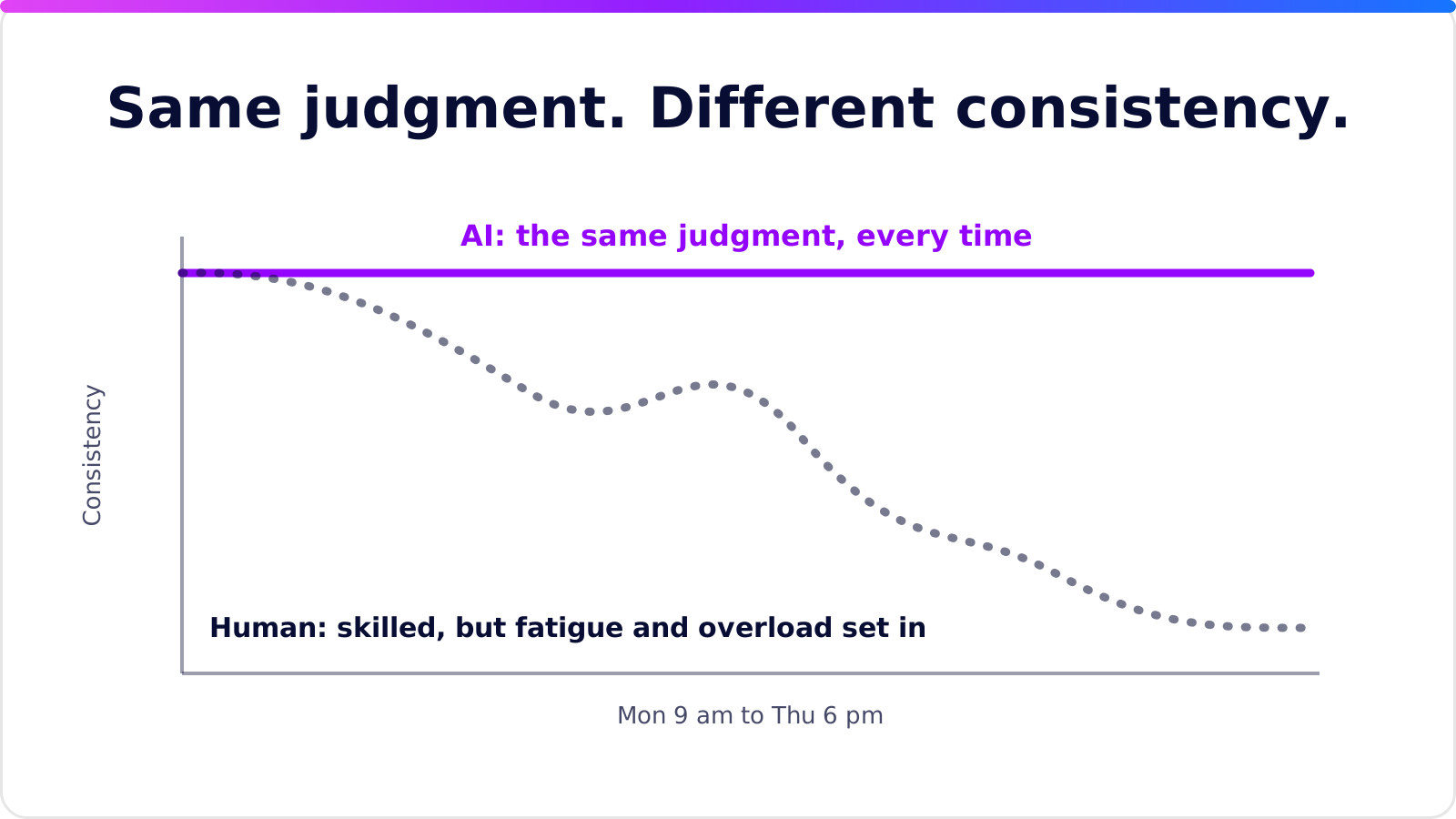
A skilled human does it well, but not consistently.
A top telecaller does everything in this guide naturally. Then reality hits:
- 60 to 100 live leads, each with their own promises and constraints.
- Notes written in a rush, or never written.
- Energy that drops by afternoon, and bad days.
- Hot new leads that push older warm ones out of mind.
- Leave, attrition, and handovers that wipe out memory.
The rep isn't failing on skill. The limit is working memory and bandwidth. A rep who is brilliant on Monday morning can't hold 80 conversations in their head by Thursday evening. And in sales, the missed callback is the lost deal.
AI does the same judgment repeatedly, without fatigue.
An AI can:
- Read every call and note the same way every time, at 9 am and at 9 pm.
- Remember every promise, constraint and objection for every lead, indefinitely.
- Surface the right follow-up at the right moment, with context and a draft ready.
- Apply best-practice cadence consistently across the whole team, not just to the top performer's leads.
- Survive rep turnover, because the memory belongs to the lead, not the person.
The goal isn't to replace the telecaller. The conversation, the empathy, the persuasion and the relationship stay human. The goal is to give every rep the memory and discipline of their best day, on every lead, every day.
| Rule-based CRM | Human alone | Human + AI | |
|---|---|---|---|
| Understands nuance | No | Yes | Yes |
| Remembers every loop | Partly (if logged) | No, bandwidth-limited | Yes |
| Consistent daily | Yes | No | Yes |
| Adapts timing/tone | No | Yes, when time allows | Yes |
| Scales to the whole team | Yes | No | Yes |
6. Common mistakes to train out of your team
- "Just checking in" messages. They add nothing. Always bring something new.
- Following up only on hot leads. Warm leads become hot with steady, patient contact.
- Giving up after one or two attempts. Plan for a multi-touch cadence.
- Ignoring stated constraints. Calling before the date the prospect gave you destroys trust.
- Vague next steps. "I'll call you soon" is not a plan. Agree on a day and a window.
- No notes. Memory you don't record is memory you'll lose.
- Same message on every attempt. Change the angle, channel or timing.
- Never closing the loop. Leads that are neither won nor lost clutter the pipeline and hide the real opportunities.
7. Quick-start checklist for sales trainers
On every call
- ☐ Confirm the next step out loud, with a day and time window.
- ☐ Capture commitments (yours and theirs), constraints, objections, and decision-makers.
- ☐ Rate the lead's heat honestly.
Before every follow-up
- ☐ Re-read the context. Never call cold.
- ☐ Decide what new thing you're bringing.
- ☐ Choose the channel that fits this prospect.
Every day
- ☐ Clear all due follow-ups before starting new outreach.
- ☐ Log an outcome for every attempt.
- ☐ Reschedule with a reason, never silently.
Every week
- ☐ Review stalled hot leads.
- ☐ Review which cadences, channels and messages are working.
- ☐ Prune dead leads, with a clean close or a long-gap nurture.
8. Metrics that matter
Track these and review them in team meetings:
- Follow-up completion rate: due follow-ups done on time ÷ total due.
- Time-to-follow-up: gap between promised and actual contact.
- Contact rate by window: which hours get answered calls.
- Reply rate by channel and message type.
- Stage progression: how often a follow-up moves a lead forward.
- Silent-lead rate: how many leads go dark and at what point.
- Snooze/reschedule rate: a high rate signals a planning or workload problem.
If you only track one: follow-up completion rate. It's the cleanest leading indicator of pipeline health.
9. How Memorly.AI helps
Memorly.AI is built to carry the consistency part of follow-up so your team can focus on the conversations that close. It works with the tools you already use, so there is no CRM migration:
- Captures leads from WhatsApp, IndiaMART, JustDial, Magicbricks, Google Sheets, Odoo, Zoho and 100+ other lead sources.
- Qualifies prospects so reps spend time on the leads that are ready.
- Follows up automatically on every enquiry, so no promise or callback is forgotten.
- Adapts to each customer's tone, so follow-ups read like a conversation and not a template.
- Manages campaign workflows alongside everyday follow-ups.
Getting started is quick: WhatsApp the team, join a 1-hour onboarding call where your WhatsApp and lead sources are connected, and follow-ups start going out automatically. A consultant is assigned to tune it as it learns your business.
Try it free: 14-day free trial, no card needed. Plans start from ₹2,400/month (billed yearly), with setup from ₹9,999. See pricing
10. Closing thought
Selling is a game of memory and timing. The best reps are great because they remember what mattered to each person and show up at the right moment with something useful. Judgment of that kind used to need a human, and it needed that human to be at their best every hour of every day.
Now there's a second option. Let AI carry the memory and the consistency, and let your people do what only people can: listen, build trust, and close.
Note: all numbers, cadences and examples above are illustrative. Tune them to your product, market and regulatory environment.